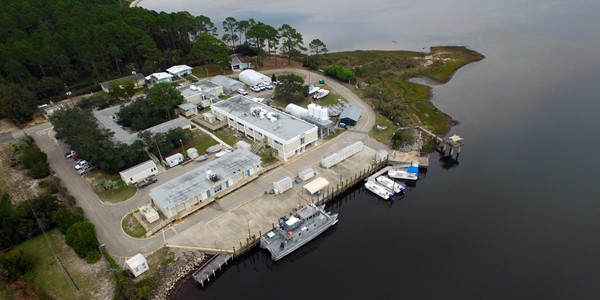
FACILITIES

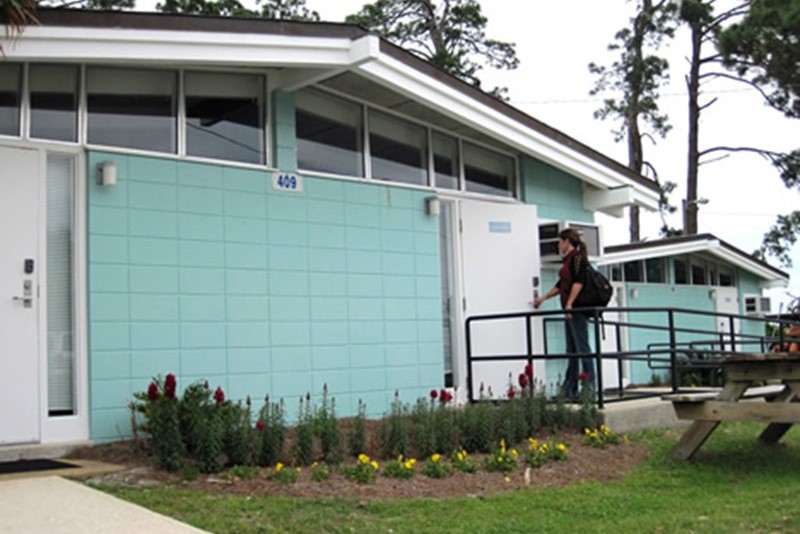
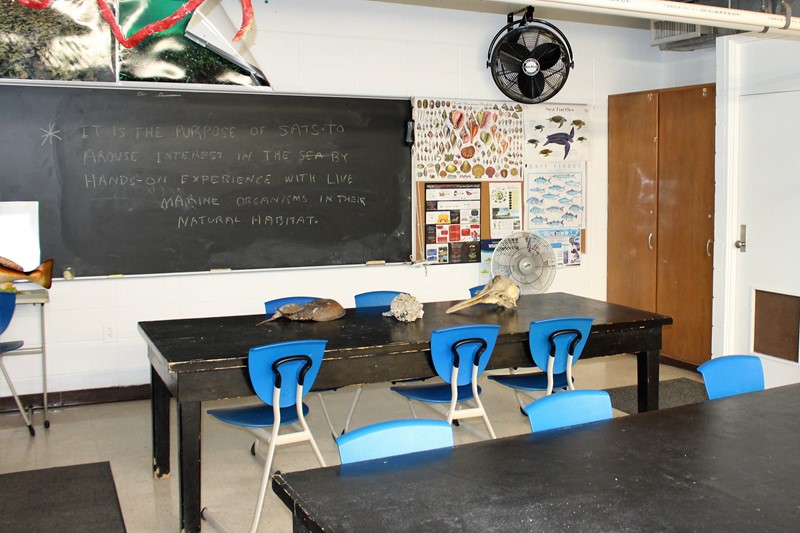
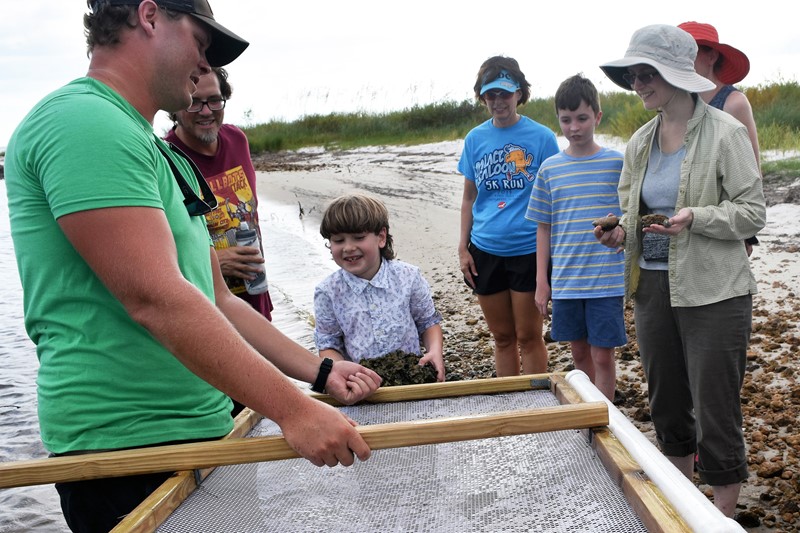
The FSUCML facilities are available for the research and education needs of FSU faculty, staff, and students. Also welcome are visitors from other universities and from state and federal agencies. Facilities at the FSUCML include a fleet of boats, housing, a computer laboratory, an auditorium, several greenhouses, classrooms, laboratories and a fully-operational scientific diving program to support the research, education, and outreach missions of the laboratory. Training is provided for small-boat operations and scientific diving, and personnel are available to assist in the planning and staging of laboratory and/or field-based research and educational programs. FSUCML users have limited access to the maintenance shop. Help is also provide for the collection, care and feeding of live organisms.

Click here for the housing, boat use, and space reservation form, and click here to reserve diving equipment.

Click here for Hold Harmless agreement

Click here for Teacher Waiver

  top

The Florida State University Coastal and Marine Laboratory has a number of vessels available for research and education purposes. These vessels are well suited for working in the shallow bays and coastal areas of northwest Florida. Some specimen-collecting equipment is provided upon request.

SMALL BOATS
SMALL VESSELS
Small Boat Operation Certification and Procedures
LARGE VESSELS
Other Vessels in the Gulf of Mexico, elsewhere in U.S.


FSUCML SMALL VESSELS

All FSUCML small boats are equipped with USCG approved and required safety devices, VHF radio, GPS, and depth-sounding devices. Trailers are available for transport of all small vessels except the catamarans, which are not transported from FSUCML. Some specimen collecting equipment is provided upon request.

28-ft catamarans, 90-hp outboard
Maxium capacity: Twelve (12) people
Max. weight (people & gear) = 2400 lbs

20-ft Privateer, 90-hp outboard
Maximum capacity: Five (5) people;
Max. weight (people & gear) = 1200 lbs

16' Carolina Skiff, 25 hp outboard
Maximum capacity Three (3) people
Max. weight (people & gear) = 600 lbs

17’ 9 “ Cape Horn, 115 hp outboard
Maximum capacity Five (5) people
Max. weight (people & gear) = 1200 lbs

18' Polar, 70-hp outboard
Maximum capacity Five (5) people
Max. weight (people & gear) = 1200 lbs


Small Boat Operation Certification and Procedures

Individual users can serve as small-boat operators after meeting the certification requirements given below. FSUCML can provide a boat operator for a fee if given advanced notice. Users requiring boat operators should make requests when making reservations for boat use.

BOAT-OPERATOR CERTIFICATION

All FSUCML boat users must be certified as such by the Small Boat Maintenance Specialist
Certification requirements include the following:

BOAT-OPERATOR RESPONSIBILITIES:

  • The boat operator is responsible for safe boat operation and compliance with all FSUCML, state, and federal policies related to SAFETY, RULES OF THE ROAD and EQUIPMENT ON BOARD. In emergencies, the boat operator may deviate from these practices at his or her discretion, especially where safety for passengers and crew is a concern.
  • FSUCML boat operators are required to have a crew onboard to be in compliance with FSUCML safety procedures.
  • The boat operator shall:
    • Brief passengers before departure on the location and proper use of all safety and communication equipment.
    • Determine special medical needs of any passengers before departure.
    • Ensure that all non-swimming passengers wear personal flotation devices (PFD) at all times. During foul weather or emergencies, EVERY individual on board must wear a PFD. All occupants must be seated while underway, where seats are provided.
    • Report to the Small Boat Maintenance Specialist all accidents, damage, and malfunction of vessels IMMEDIATELY upon return to FSUCML.
    • Collect waivers from each passenger before departure.
  • Boat operators, crew, and passengers should remain in the boat at all times while the motor is running. All diving from small boats must adhere to diving safety rules. See the Academic Diving Program website.

SMALL BOAT OPERATING PROCEDURES
Area of operation on and off Site:
  • On-site use: Small boats may be used in all protected areas of bays and inland of barrier islands and shoals or in rivers or lakes. These areas include all of St. George Sound, extending eastward from the Carrabelle River channel landward of Dog Island and Dog Island Reef to the mouth of and including the Alligator Harbor.
  • Off-site use (Privateer, Carolina Skiff only): All off-site use is subject to the approval of the Small Boat Maintenance Specialist.
LARGE BOATS (Operated by the FSUCML Licensed Marine Captain)
R/V Seminole a - 48-ft diesel-powered vessel:
  • Maximum capacity1 20 people; total weight of people and cargo and gear not to exceed 8,000 pounds.
  • Maximum speed: 10 knots
  • Maximum range 500 miles without refueling

Accommodations sleeps four 4 comfortably. Facilities include heating and air conditioning, household refrigerator, microwave oven, 125 gallons of fresh water.


  top

Housing available on the FSUCML campus includes comfortable, air-conditioned dormitories and a guest house, including linens and fully equipped kitchens.

DORMITORIES: Each dormitory unit has three bunk beds, one bathroom, and a small kitchenette and dinette area.

GUEST HOUSE: The Guest House has four bedrooms and two baths, kitchen, and a large central dining- living area that opens onto a beachside patio. One bedroom has three bunk beds, two bedrooms have two bunk beds and one bedroom has one bunk bed sleeping 12 in all.

CHECK-IN, CHECK-OUT: Check-in and check-out occur between 8000 and 1700 hours (EST). Alternate arrangements can be made, if necessary.

  top

Office services available to nonresident users include faxing and photocopying (fees apply). Long-term nonresident users requiring telephones are responsible for all fees associated with telephone hookup and operation. Short-term visitors should bring cell phones or use calling cards to make long-distance calls.

Computer accounts are provided to FSU faculty, staff, and students. The FSUCML IT system administrator is responsible for making all IT device connections and adding software to on-site computers. Please submit all requests for IT hook-up and additional programs to the facilities manager.

Visitors are provided access to the internet at the FSUCML through an on-site computer laboratory.

All users of information technology resources at the FSUCML are subject to Florida State University Policy and Procedures. Users are expected to comply with the university’s Best Practices for Computing at FSU, which can be found at http://www.ucs.fsu.edu/special/best_practices.html. Be certain to keep computers up to date on anti-virus software. Users will receive notification of these updates by email.

  top

Classrooms and laboratory space are available for all FSU users to further the research, education, and outreach missions of the FSUCML. Limited access to the Maintenance Shop is provided for FSU users. All primary and secondary-school students participating in educational programs must be supervised in the classroom, laboratory, and field at all times. The ratio of adults to students in such programs must be no less than one adult for five students. Students staying overnight must be in at least the ninth grade.

CLASSROOM SPACE AND EQUIPMENT
Three dry classroom spaces are available:

  • Administration Bldg: Auditorium (seats 48)
  • Administration Bldg Conference Room: (seats 10; undergraduate, graduate, adult classes only)
  • Bldg 462: (seats 10; undergraduate, graduate, adult classes only)

Two wet classrooms with modest wet tables for holding specimens, work tables, microscopes, and modest glassware are also available:

  • Reef Fish Ecology Building Wet Classroom
  • Main Laboratory Building Wet Classroom

LABORATORY SPACE AND EQUIPMENT
Private Laboratories
Analytical Laboratory (Common Space)
Constant Temperature Rooms (Common Space)
Aquaria, Tanks, and Wet Tables
Chemical Use
Greenhouses

PRIVATE LABORATORIES

Each laboratory suite in the main laboratory building is provided with:

  • Incoming running seawater line
  • Wet table (4ft x 6ft or smaller), plumbed to the floor drain
  • Potable water (chlorinated and softened) sink spigot, hot and cold faucet controls, and sink-countertop cabinet
  • (Nonpotable fresh water is available upon request. Charges are applied to cover cost of installation.)
  • Four 1/8" low-pressure, high-volume air spigot/valves
  • Countertop and cabinet spaces
  • Numerous 110-volt and several 220-volt electrical outlets
  • Internet connectivity

LABORATORY SPACE ALTERATIONS:

Laboratory space may be altered to suit the research needs of the FSU user, at the user’s expense. Users can obtain a floor plan from the front office. Users should indicate on the floor plan a schematic for all alterations and consider the following:

  • maximum live loads, which must not exceed 60 psf within the laboratory building
  • location of tanks, work benches, cabinets and other needs
  • layout of electrical components, requirements and use (voltage, amperage, grounding)
  • layout of seawater and fresh-water piping

The user should seek approval through the before the installation of any electrical or other equipment that may interfere or integrate with any component of the "common" facility service and engineered services

ANALYTICAL LABORATORY

The following equipment is available in the common analytical space (Lab #6) of the laboratory building:

  • Eppendorf automatic pipettes
  • Magnetic stirrer
  • Mettler toploader electronic balance (dry work)
  • Sartorius analytical electronic balance (wet work)
  • Mettler analytical electronic balance (dry work)
  • Orion pH meter with combination electrodes
  • Orion ion-specific meter with ammonia, pH, and dissolved oxygen electrodes.
  • Millipore filtering apparatus; vacuum pump, and paper
  • Glassware, weighing papers and boats, filter papers, chemicals
  • Drying Oven
  • Top load balance - (0.01 - 600g)

MICROSCOPY LABORATORY

  • ZEISS Stereomicroscope and Imager. AXIO
  • ZEISS Stereoscope Discovery .V12

CONSTANT-TEMPERATURE ROOMS

Two constant-temperature rooms (approximately 7 ft x 7 ft) are available.

GREENHOUSES, AQUARIA, TANKS, AND, WET TABLES

  • There are three greenhouses located on property and available for the research needs of the users. Space is limited.
  • Tank and Animal Holding Facilities The FSU Coastal and Marine Lab maintains a range of tank and animal holding facilities. These include small (2-15 gal) re-circulating aquaria systems, outdoor flow-through tanks, indoor environmentally-controlled tank arrays, and special use tanks (i.e., 2500 gal) for large animals or large numbers of organisms (see accompanying table and photos). Tanks are also available that can be set-up on an as-needed basis. To request use of the tank facilities send a brief email detailing tank/aquaria needs, duration, and purpose of use to Kevin Craig (kevin.craig@bio.fsu.edu), Chris Koenig (koenig@bio.fsu.edu), or Dennis Tinsley (cdtinsley@fsu.edu). Requests should be made the quarter prior to when the need is anticipated. The committee will meet quarterly to evaluate requests and assign space. Once animal holding space is assigned, it will be the responsibility of the user to maintain the area and clean the tanks after use.
    Holding Tank Chart
  • All aquaria, tanks, and other water containers must be placed in wet tables plumbed to the floor drain (in case of catastrophic spills) and placed 2-3 feet away from all electrical outlets.

CHEMICAL USE

Individual researcher are responsible for maintaining and complying with the specifications of Materials Safety Data Sheets (MSDS) for all materials in all spaces they occupy. RADIONUCLIDE use is arranged through the FSU Office of Radiation Safety.

HAZARDOUS MATERIAL:

Principal Investigators (PIs) are responsible for contacting the Florida State University Office of Environmental Health and Safety (644-6895) for all necessary safety information about handling hazardous or flammable material. In addition, the PI is responsible for:

  • complying with all aspects of the Florida Right to Know Law by providing all Materials Safety Data Sheets to their project personnel.
  • providing all the necessary personal safety information and equipment for all individuals handling hazardous materials, including:
    • appropriate containers and handling equipment that are safety approved and properly labeled
    • appropriate materials for clean-up and disposal of all materials
    • Instruction in all appropriate safety procedures attendant to the presence of the materials

MAINTENANCE SHOP

Tools and machinery in the Maintenance Shop are available to users upon approval by the FSUCML Maintenance Specialist. Access to the shop is between 0800 to 1600 hours Monday through Sunday. Safety goggles or face masks MUST BE WORN AT ALL TIMES during operation of ANY power tool. Report any malfunctioning equipment immediately to FSUCML staff.

  top

PERMITS: All FSU-associated users are required to have current collection permits from the Florida Fish and Wildlife Conservation Commission (contact Lisa Gregg. Email: LISA.GREGG@myFWC.com). Non-FSU visitors can make limited collections if accompanied by a permit-authorized FSUCML staff member.

COLLECTION EQUIPMENT: A limited assortment of field collection equipment is available, including:

  • A modest supply of collecting buckets and wash tubs
  • Nets:
    • dip nets
    • otter trawls
    • grabs
    • dredge net

ANIMAL CARE AND USE: Anyone collecting or using vertebrate specimens at the FSUCML must have an FSU protocol on file with the FSU Animal Care & Use Committee (ACUC) and make a copy of the ACUC protocol available to FSUCML staff.

Researchers are asked to limit collections to a minimum. Specimens no longer needed for education or research should be returned to their collection site.

  top

A user interested in conducting long-term research at aquatic sites in St. George Sound must submit a research plan, including detailed site location to ensure the coordination of all projects. All research sites must be clearly marked "FSU-FSUCML RESEARCH." At the conclusion of all projects, the principal investigator is responsible for removing all site markings and any structures. Habitats in close proximity to the laboratory are described on our Classroom Website.